
 Historic
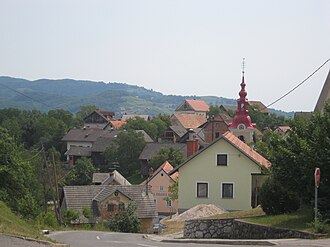
Drašiči
Drašiči
Drašiči (pronounced [ˈdɾaːʃitʃi]; German: Draschitz) is a village in the Municipality of Metlika in the White Carniola area of southeastern Slovenia, next to the border with Croatia.
Ler na Wikipedia
Descubra as atrações, pontos turísticos e lugares imperdíveis mais populares de Croácia.
45 locais para visitar
HistoricDrašiči (pronounced [ˈdɾaːʃitʃi]; German: Draschitz) is a village in the Municipality of Metlika in the White Carniola area of southeastern Slovenia, next to the border with Croatia.
Ler na Wikipedia Fortifications
 Historic
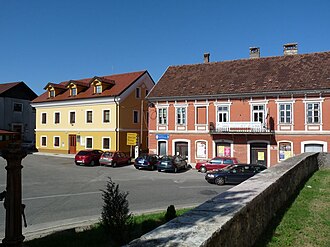
Raka (pronounced [ˈɾàːka]; German: Arch) is a village in the Municipality of Krško in eastern Slovenia. The area is part of the traditional region of Lower Carniola. It is now included with the rest of the municipality in the Lower Sava Statistical Region.
Ler na Wikipedia Religious Site
Pleterje Charterhouse (Slovene: Kartuzijanski samostan Pleterje; German: Kartause Plettriach, also Pleterjach, Pletriach, or Pleteriach) is a Carthusian monastery, or charterhouse, in the village of Drča near Šentjernej in Slovenia, the only extant monastery of that order in the country.The monast…
Ler na Wikipedia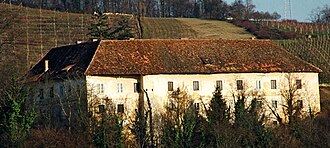 Fortifications
Raka Castle (pronounced [ˈɾaːka]) is one of the oldest medieval castles in Slovenia.Raka is located in the Municipality of Krško.Raka Castle (German: Arch) was documented as early as 1161 and explicitly mentioned as Castrum Arch in 1279.
Ler na Wikipedia Historic
Veliki Podlog (pronounced [ˈʋeːliki ˈpoːdlɔk]; German: Großpodlog) is a village in the Municipality of Krško in eastern Slovenia. It lies south of the main motorway from Ljubljana to Zagreb south of Leskovec. The area is part of the traditional region of Lower Carniola.
Ler na Wikipedia Historic
Podbočje (pronounced [pɔdˈbóːtʃjɛ]; German: Heiligenkreuz) is a village on the right bank of the Krka River in the foothills of the Gorjanci range in the Municipality of Krško in eastern Slovenia. The area is part of the traditional region of Lower Carniola.
Ler na Wikipedia Historic
Pečice (pronounced [ˈpeːtʃitsɛ]) is a settlement in the Municipality of Brežice in eastern Slovenia. The area is part of the traditional region of Styria.
Ler na Wikipedia Historic
Bistrica ob Sotli (pronounced [ˈbiːstɾitsa ɔp ˈsoːtli]) is a settlement in eastern Slovenia. It is the seat of the Municipality of Bistrica ob Sotli. The settlement lies on a river terrace above the right bank of the Sotla River. The area traditionally belonged to the region of Styria.
Ler na Wikipedia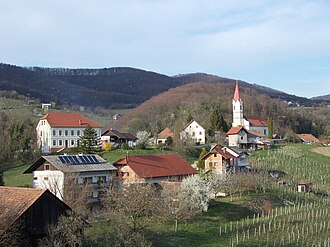 Historic
Sromlje (pronounced [ˈsɾoːmljɛ], German: Sromle) is a village in the hills north of Brežice in the Municipality of Brežice in eastern Slovenia. The area is part of the traditional region of Styria.
Ler na Wikipedia Architecture
The Brežice Water Tower was built in 1914, together with a city sewage system and electrification. It used to serve as the water supply for Brežice until the new water house was built below Šentvid Hill above the town.
Ler na Wikipedia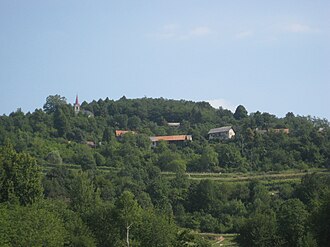 Historic
Krašnji Vrh (pronounced [ˈkɾaːʃnji ˈʋəɾx]; German: Kraschenberg) is a small village in the Municipality of Metlika in the White Carniola area of southeastern Slovenia, right on the border with Croatia.
Ler na Wikipedia Religious Site
Olimje Castle (Slovene: Grad Olimje) is a 16th-century castle located in the settlement of Olimje, part of the Municipality of Podčetrtek in eastern Slovenia. It is currently a Franciscan monastery.The predecessor of the current castle occupied the site since c.
Ler na Wikipedia Historic
Šentjernej (pronounced [ʃɛnˈtjɛːɾnɛi̯] or [ʃənˈtjɛːɾnɛi̯]; in older sources also Šent Jernej, German: Sankt Bartlmä) is a small town in southeastern Slovenia. It is the seat of the Municipality of Šentjernej. The area is part of the traditional region of Lower Carniola.
Ler na Wikipedia Fortifications
Veliki Tabor (Croatian: Great Camp) is a castle and museum in northwest Croatia, dating from the middle of 15th century. The castle's present appearance dates back to the 16th century.Most of the castle was built by the Hungarian noble family of Ráttkay, in whose ownership it remained until 1793.It…
Ler na Wikipedia Historic
Brestanica (pronounced [ˈbɾeːstanitsa]) is an urban settlement in the Municipality of Krško in eastern Slovenia. It lies in the valley at the confluence of the Sava River with a minor tributary called the Brestanica. The area is part of the traditional region of Styria.
Ler na Wikipedia Historic
Sedlarjevo (pronounced [sɛˈdlaːɾjɛʋɔ]) is a settlement on the right bank of the Sotla River in the Municipality of Podčetrtek in eastern Slovenia, right on the border with Croatia. The area around Podčetrtek was traditionally part of the region of Styria.
Ler na Wikipedia Architecture
Krško Castle (Slovene: Grad Krško, German: Schloss Gurckfeld) is a 12th-century castle ruin to the right of the Sava above the old center of the town of Krško, southeastern Slovenia. It stands in the territory of the settlement of Cesta.
Ler na Wikipedia Fortifications
Leskovec Castle or Turn Castle (Slovene: Grad Turn, Turn na Vrhu, Turnska graščina, Šrajbarski turn, Grad Leskovec; German: Thurn am Hart) is a 15th-century castle north of the village of Leskovec pri Krškem (Municipality of Krško), southeastern Slovenia.
Ler na Wikipedia Historic
Kunšperk (pronounced [ˈkuːnʃpɛrk]; German: Königsberg) is a settlement on the right bank of the Sotla River in the Municipality of Bistrica ob Sotli in eastern Slovenia. The area is part of the traditional region of Styria.
Ler na Wikipedia Historic
Pišece (pronounced [piˈʃeːtsɛ], German: Pischätz) is a village in the hills west of Bizeljsko in the Municipality of Brežice in eastern Slovenia. The area is part of the traditional region of Styria. It is now included with the rest of the municipality in the Lower Sava Statistical Region.
Ler na Wikipedia Historic
Kapele (pronounced [kaˈpeːlɛ], German: Kapellen) is a village in the Municipality of Brežice in eastern Slovenia, close to the border with Croatia. The area is part of the traditional region of Styria. It is now included in the Lower Sava Statistical Region.
Ler na Wikipedia Aquatic protected areas
Jovsi is an extensive natural plain divided into wetlands and covering an area of 4.6 square kilometers (1.8 sq mi) in the Municipality of Brežice in Slovenia. It lies west of the lower course of the Sotla River below the Kapele Hills (Slovene: Kapelske gorice).
Ler na Wikipedia Fortifications
Mokrice Castle (pronounced [mɔˈkɾiːtsɛ]; Slovene: grad Mokrice, German: Mokritz) is a medieval castle southeast of Brežice, Slovenia, located on a hill in the northern part of the settlement of Rajec in the Gorjanci Hills, near the Croatian border.
Ler na Wikipedia Historic
Jesenice (pronounced [jɛsɛˈniːtsɛ]; sometimes also Jesenice na Dolenjskem, German: Jessenitz) is a settlement on the right bank of the Sava River in the Municipality of Brežice in eastern Slovenia, right on the border with Croatia. The area is part of the traditional region of Lower Carniola.
Ler na Wikipedia Railway stations
Zagreb Zapadni kolodvor (Croatian for Zagreb West station) is a railway station in the city of Zagreb, Croatia.The station opened in 1862, and was the city's main station until the opening of Zagreb Glavni railway station in 1892.
Ler na Wikipedia Cultural
The Nikola Tesla Technical Museum (Croatian: Tehnički muzej Nikola Tesla) is located at 18 Savska Street in Zagreb and it exhibits numerous historic aircraft, cars, machinery and equipment.The Technical Museum was founded in 1954 and went into operation in Savska Street in 1963.
Ler na Wikipedia Cultural
Zagreb City Museum or Museum of the City of Zagreb (Croatian: Muzej grada Zagreba) located in 20 Opatička Street, was established in 1907 by the Association of the Brethren of the Croatian Dragon (Croatian: Braća hrvatskoga zmaja).It is located in a restored monumental complex (12th-century Popov…
Ler na Wikipedia Religious Site
Zagreb Cathedral, on the Kaptol, is a Roman Catholic cathedral-church and not only the second tallest building in Croatia but also the most monumental sacral building in Gothic style southeast of the Alps. It is dedicated to the Assumption of Mary and to kings Saint Stephen and Saint Ladislaus.
Ler na Wikipedia Cultural
The Art Pavilion in Zagreb (Croatian: Umjetnički paviljon u Zagrebu) is an art gallery in Zagreb, Croatia. The Pavilion is located on the Lenuci Horseshoe, Lower Town area of the city, south of Nikola Šubić Zrinski Square and just north of the King Tomislav Square with the Zagreb Central Station.…
Ler na Wikipedia Mountain peaks
Kalnik or Kalničko gorje is a mountain in northwestern Croatia. Its highest peak is the eponymous Kalnik at 642 metres (2,106 ft).http://www.tz.kalnik.hr/
Ler na Wikipedia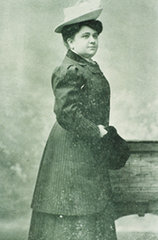 Cultural
Marija Jurić (Croatian: [mǎrija jǔːritɕ]; 2 March 1873 – 30 November 1957), known by her pen name Zagorka (IPA: [zǎːɡoːrka]), was a Croatian journalist, writer and women's rights activist. She was the first female journalist in Croatia and is among the most read Croatian writers.
Ler na Wikipedia Park
ParkMaksimir Park is the oldest public park in Zagreb, Croatia. It forms part of the city's cultural heritage and is a habitat for many different plant and animal species.
Ler na Wikipedia Cultural
Vladimir Nazor (30 May 1876 – 19 June 1949) was a Croatian poet and politician. During and after World War II in Yugoslavia, he served as the first President of the Presidium of the Croatian Parliament (Croatian head of state), and first Speaker of the Croatian Parliament.Nazor is however most rem…
Ler na Wikipedia Religious Site
Church of Saint Blaise (Croatian: Crkva Svetog Blaža) is a Catholic parish church located in the Lower Town of Zagreb, Croatia. It is dedicated to the Saint Blaise, and was designed by the Croatian architect Viktor Kovačić in the eclectic style.
Ler na Wikipedia Entertainment
Vatroslav Lisinski Concert Hall (Croatian: Koncertna dvorana Vatroslava Lisinskog) is a large concert hall and convention center in Zagreb, Croatia. It is named after Vatroslav Lisinski, a 19th-century Croatian composer. The building has a big hall with 1,841 seats and a small hall with 305 seats.
Ler na Wikipedia Religious Site
The Zagreb Mosque, located in the city of Zagreb, is the largest mosque in Croatia. The Islamic Secondary School "Dr. Ahmed Smajlović" and a cultural centre operate within the mosque.
Ler na Wikipedia Cultural
Croatian Railway Museum (Croatian: Hrvatski željeznički muzej) is a specialized technical museum in Croatian capital Zagreb, located on the premises of Zagreb Glavni kolodvor, the main railway station of Zagreb.Efforts to establish a railway museum in Zagreb go back to 1966, when Zagreb railway ad…
Ler na Wikipedia Historic
Rogatec (pronounced [ɾɔˈɡaːtəts]; German: Rohitsch) is a small town in eastern Slovenia, on the border with Croatia. It is the seat of the Municipality of Rogatec. The area traditionally belonged to the region of Styria.
Ler na Wikipedia Fortifications
Pišece Castle (Slovene: grad Pišece, German: Schloss Pischätz) is a castle in Pišece, Slovenia.The castle appears for the first time in written sources in 1329, and was built to serve the Archbishopric of Salzburg who had estates in the area.
Ler na Wikipedia Fortifications
Bizeljsko Castle (Slovene: grad Bizeljsko; grad Orešje, German: Schloss Wisell) is a castle in Bizeljska Vas, a village in the Municipality of Brežice, southeastern Slovenia.
Ler na Wikipedia Railway stations
Zagreb Glavni kolodvor (Croatian for Zagreb main station) is the main railway station in Zagreb. Located 1 km (0.62 mi) south of the city's main square, it is the largest station in Croatia and the main hub of the Croatian Railways network.An 1890 act of the Royal Hungarian Government authorised the…
Ler na Wikipedia Religious Site
The Basilica of the Heart of Jesus (Croatian: Bazilika Srca Isusova) is a Roman Catholic basilica located in Palmotićeva street of Zagreb, Croatia.
Ler na Wikipedia Religious Site
The Meštrović Pavilion (Croatian: Meštrovićev paviljon), also known as the Home of Croatian Artists (Croatian: Dom hrvatskih likovnih umjetnika) and colloquially as the Mosque (Croatian: Džamija), is a cultural venue and the official seat of the Croatian Society of Fine Artists (HDLU) located o…
Ler na WikipediaPonikve (pronounced [pɔˈniːkʋɛ]) is a settlement in the Municipality of Brežice in eastern Slovenia, close to the border with Croatia. The area is part of the traditional region of Lower Carniola.
Ler na WikipediaCroatia, officially the Republic of Croatia, is a country in Central and Southeastern Europe, on the coast of the Adriatic Sea. It borders Slovenia to the northwest, Hungary to the northeast, Serbia to the east, Bosnia and Herzegovina and Montenegro to the southeast, and shares a maritime border with Italy to the west. The Croatian archipelago contains over 1,000 islands and islets, the largest overseas territory on the Adriatic Sea.
Ler na WikipediaFique conectado com um plano eSIM acessível — ativação instantânea, sem taxas de roaming.
Ver planos eSIM para CroáciaDados do OpenTripMap & OpenStreetMap