 Mountain peaks
شقيف تامر
Scopri le attrazioni più popolari, i monumenti e i luoghi da visitare in Lebanon.
85 luoghi da visitare
Mountain peaks Historic
Moukhtara (Arabic: المختارة) is a small town in the Chouf District of the Mount Lebanon Governorate of Lebanon. The town's inhabitants are divided between Druze and Christians. It is the hometown of Walid Jumblatt, the leader of Lebanon's Progressive Socialist Party.
Leggi su Wikipedia Bridge
The Mudeirej Bridge or Mdairej Bridge is a bridge in Lebanon. It was completed in 1998 as the tallest and highest bridge in Lebanon and the Middle East but this has since been surpassed.
Leggi su Wikipedia Religious Site
The Maronite Catholic Archeparchy of Antelias (informally Antelias of the Maronites) (in Latin: Archieparchia Anteliensis Maronitarum) is a Maronite (Antiochian Rite, Arabic), non-Metropolitan Archeparchy (Eastern Catholic Archdiocese) in northern Lebanon.It is immediately dependent on the Maronite…
Leggi su Wikipedia Religious Site
The Armenian Catholicosate of the Great House of Cilicia (Armenian: Կաթողիկոսութիւն Հայոց Մեծի Տանն Կիլիկիոյ) is an autocephalous Oriental Orthodox church. Since 1930, the Catholicosate of the Great House of Cilicia has been headquartered in Antelias, Lebanon.
Leggi su Wikipedia Historic
The Hope for Peace (Espoir de Paix) Monument is a monument in Yarze, Lebanon, made to celebrate the end of the Lebanese Civil War in 1990. It was designed by the French-born American artist Armand Fernandez. It is located near the Ministry of National Defence. It was built in 1995.
Leggi su Wikipedia Palaces
Baabda Palace (or Presidential Palace, French: Palais présidentiel de Baabda, Arabic: قصر بعبدا), also known as Qantari Palace, is the official residence of the President of Lebanon.
Leggi su Wikipedia Other
OtherOn 4 August 2020, a large amount of ammonium nitrate stored at the Port of Beirut in the capital city of Lebanon exploded, causing at least 218 deaths, 7,000 injuries, and US$15 billion in property damage, and leaving an estimated 300,000 people homeless.
Leggi su Wikipedia Cultural
The Archaeology Museum of the American University of Beirut in Beirut, Lebanon is the third oldest museum in the Near East after Cairo and Constantinople.
Leggi su Wikipedia Religious Site
Al-Majidiyyeh Mosque (Arabic: جامع المجيدية) is a mosque located in Beirut, Lebanon.Originally a fort, the building was converted into a mosque in the mid-19th century and named after Sultan Abdul Majid. Damaged during the Lebanese Civil War, the mosque was restored in 2004.
Leggi su Wikipedia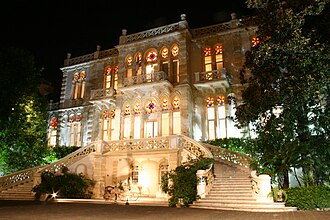 Cultural
The Sursock Museum (Arabic: قصر سرسق), which is officially known as the Nicolas Ibrahim Sursock Museum, is a modern art and contemporary art museum in Beirut, Lebanon.In 1912, the wealthy and prominent Lebanese aristocrat Nicolas Ibrahim Sursock built the private villa that now houses the…
Leggi su Wikipedia Historic
The law school of Berytus (also known as the law school of Beirut and the Berytian school of Roman law) was a center for the study of Roman law in classical antiquity located in Berytus (modern-day Beirut, Lebanon).
Leggi su Wikipedia Settlements
Berytus (; Phoenician: 𐤁𐤉𐤓𐤅𐤕𐤀, romanized: Biruta; Ancient Greek: Βηρυτός, romanized: Bērytós; Latin: Bērȳtus), briefly known as Laodicea in Phoenicia (Ancient Greek: Λαοδίκεια ἡ ἐν Φοινίκῃ) or Laodicea in Canaan from the 2nd century to 64 BCE, was t…
Leggi su Wikipedia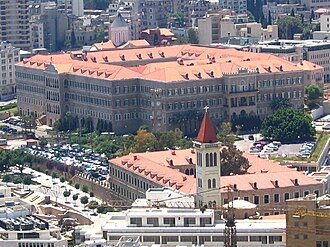 Architecture
The Grand Serail (Arabic: السراي الكبير, al-Sarāy al-Kabir; French: Le Grand Serail; also known as the Government Palace) is the headquarters of the Prime Minister of Lebanon. It is situated atop a hill in downtown Beirut a few blocks away from the Lebanese Parliament building.
Leggi su Wikipedia Palaces
Beiteddine Palace (Arabic: قصر بيت الدين) is a 19th-century palace in Beiteddine, Lebanon. It hosts the annual Beiteddine Festival and the Beiteddine Palace Museum.Emir Bashir II of the Shihab dynasty, who later became the ruler of the Mount Lebanon Emirate, built the palace between 17…
Leggi su Wikipedia Fortifications
Moussa Castle is a castle between Deir el Qamar and Beit ed-Dine in Lebanon.The 3,500 sq m (37,673 sq ft) castle was built by Moussa Abdel Karim Al Maamari, and was opened to the public in 1969.
Leggi su Wikipedia Religious Site
The Deir el Qamar Synagogue, in Deir el Qamar, a village in south-central Lebanon, is the oldest synagogue in Mount Lebanon.
Leggi su Wikipedia Religious Site
Fakhreddine Mosque (Arabic: مسجد الأمير فخر الدين) with its octagonal minaret is a mosque in Deir al-Qamar, Lebanon. Built in 1493 by Fakhr al-Din I and restored in the sixteenth century, it is the oldest mosque in Mount Lebanon.Fakhreddine PalaceDeir el Qamar Website
Leggi su Wikipedia Religious Site
The Shrine of Our Lady of Lebanon (also known as Our Lady of Harissa, Arabic: سيدة لبنان, Sayyidat Lubnān; French: Notre Dame du Liban) is a Marian shrine and a pilgrimage site in the village of Harissa in Lebanon.
Leggi su Wikipedia Religious Site
Bkerké (Arabic: بكركي, also Bkerke or Bkirki) is the episcopal see of the Maronite Catholic Patriarchate of Antioch of the Maronite Church in Lebanon, located 650 m above the bay of Jounieh, northeast of Beirut, in Lebanon.Though now exclusively used by the church, the area was owned by the no…
Leggi su Wikipedia Religious Site
Maronite Catholic Eparchy of Joubbé, Sarba and Jounieh (in Latin: Eparchia Ioubbensis, Sarbensis et Iuniensis Maronitarum) is an eparchy of the Maronite Church immediately subject to the Maronite Patriarch of Antioch in Lebanon. In 2013 there were 396,250 baptized.
Leggi su Wikipedia Geological formations
The Jeita Grotto (Arabic: مغارة جعيتا) is a system of two separate, but interconnected, karstic limestone caves spanning an overall length of nearly 9 kilometres (5.6 mi).
Leggi su Wikipedia Battlefields
The Battle of the Hotels (Arabic: معركة الفنادق, Maʿrakah al-Fanādiq), also known as the "Hotel front" or "Front des Hotels" in French, was a subconflict within the 1975–77 phase of the Lebanese Civil War which occurred in the Minet-el-Hosn hotel district of downtown Beirut.
Leggi su Wikipedia Architecture
The Holiday Inn Beirut is a ruined hotel in Beirut, Lebanon on Omar Daouk Street in the central Minet el Hosn neighborhood. The Holiday Inn was in operation for only a year before the Lebanese Civil War broke out in 1975.
Leggi su Wikipedia Other
OtherBeirut Terraces is a residential skyscraper in the Central district of downtown Beirut, Lebanon. It is located at 1399 Fouad Najjar Street in the Minet el-Hosn neighborhood, south of the Platinum Tower. It has 26 floors with an overall height of 119.5 m (392 ft).
Leggi su Wikipedia Religious Site
Al-Omari Grand Mosque (Arabic: المسجد العمري الكبير) is a mosque in Beirut Central District, Lebanon.The Al-Omari Grand Mosque was originally the Church of Saint John and was built by the crusaders in the 12th century.
Leggi su Wikipedia Religious Site
The St. Louis Cathedral also Saint Louis Capuchin Cathedral (French: Cathédrale Saint-Louis de Beyrouth) is a Latin Catholic church in downtown Beirut, located to the north of the Grand Serail and Council of Reconstruction and Development.
Leggi su Wikipedia Religious Site
The Emir Assaf Mosque (Arabic: جامع الأمير منصور عساف) is a mosque located in downtown Beirut, Lebanon.This mosque was inaugurated by Emir Mansur Assaf in 1597, on the former Serail Square that hosted Emir Fakhreddine’s palace and celebrated gardens.
Leggi su Wikipedia Historic
The Petit Serail (Arabic: السراي الصغير / ALA-LC: as-sarāy as- ṣaghir; literally "Little Saray") was a historic administrative Ottoman building in Beirut that housed the seat of the Wali of Syria and Beirut.
Leggi su Wikipedia Religious Site
The Maghen Abraham Synagogue (Arabic: كنيس ماغين أبراهام - Kanīs Mā'ghīn Abrā'hām; Hebrew: בית הכנסת מגן אברהם - Beth HaKenesset Magen Avraham) is one of the main synagogues in Lebanon.Located in the Jewish district of Wadi Abu Jamil in downtown Beirut, the…
Leggi su Wikipedia Religious Site
The Mohammad Al-Amin Mosque (Arabic: جامع محمد الأمين), also referred to as the Blue Mosque, is a Sunni Muslim mosque located in downtown Beirut, Lebanon.In the 19th century, a Zawiya (prayer corner) was built on this site.
Leggi su Wikipedia Religious Site
Saint George Maronite Cathedral (Arabic: كاتدرائية مار جرجس للموارنة) is the cathedral of the Maronite Catholic Archeparchy of Beirut, Archdiocese of the city of Beirut, Lebanon.
Leggi su WikipediaReligious SiteMaronite Catholic Archeparchy of Beirut (in Latin: Archeparchia Berytensis Maronitarum) is an archeparchial seat of the Maronite Church immediately subject to the Holy See in Lebanon. As of 2012, there were 232,000 baptized.
Leggi su Wikipedia Museum
The Robert Mouawad Private Museum (Arabic: متحف روبير معوض الخاص) is a private residence in Beirut's Zokak el-Blat quarter that was turned into a museum by the Lebanese businessman Robert Mouawad.
Leggi su Wikipedia Urban
UrbanThe René Moawad Garden (French: Jardin René Moawad) known by the public as the Sanayeh Garden is located in the Sanayeh district of Beirut, Lebanon. The garden is one of the oldest public open-air spaces in the capital.
Leggi su Wikipedia Religious Site
The National Evangelical Church of Beirut (NEC) is a reformed church in Beirut, member of the National Evangelical Church Union of Lebanon.Established in the Lebanese capital, Beirut, in 1848 by Congregational and Presbyterian American missionaries, the NEC is the oldest and the largest of nine cong…
Leggi su Wikipedia Architecture
The Egg, or the Dome, is an unfinished cinema building in Beirut, Lebanon. Its construction began in 1965 but was interrupted with the outbreak the Lebanese Civil War in 1975 and the horse-shoe shaped dome that remains today is now a landmark in Beirut.
Leggi su Wikipedia Religious Site
The Cathedral of Saint Elias and Saint Gregory the Illuminator (Armenian: Սուրբ Եղիա – Սուրբ Գրիգոր Լուսաւորիչ եկեղեցի) is a cathedral of the Armenian Catholic Church in Debbas Square in downtown Beirut, Lebanon.
Leggi su Wikipedia Historic
The Ancient City of Damascus (Arabic: دِمَشْق ٱلْقَدِيمَة, romanized: Dimašq al-Qadīmah) is the historic city centre of Damascus, Syria.
Leggi su Wikipedia Religious Site
The Umayyad Mosque (Arabic: الجامع الأموي, romanized: al-Jāmiʿ al-Umawī), also known as the Great Mosque of Damascus, located in the old city of Damascus, is one of the largest and oldest mosques in the world.
Leggi su Wikipedia Landmark
The Palm Islands Nature Reserve consists of three flat, rocky islands of eroded limestone and the surrounding sea area, located 5.5 kilometres (3.4 mi) offshore and northwest of the city of Mina El Mina, Lebanon, to the west of Tripoli, Lebanon.
Leggi su Wikipedia Historic
Tel Hai (Hebrew: תֵּל חַי [tel χai] "Hill of Life") is a name of the former Jewish settlement in northern Galilee, the site of an early battle between Jews and Arabs heralding the growing civil conflict, and of a monument, tourist attraction, and a college.
Leggi su Wikipedia Historic
Anjar (meaning "unresolved or running river"; Arabic: عنجر / ALA-LC: ‘Anjar; also known as Hosh Mousa (Arabic: حوش موسى / Ḥawsh Mūsá), is a town of Lebanon located in the Bekaa Valley. The population is 2,400, consisting almost entirely of Armenians.
Leggi su Wikipedia Settlements
Sidon, known locally as Sayda or Saida (Arabic: صيدا), is the sixth-largest city in Lebanon. It is located in the South Governorate, of which it is the capital, on the Mediterranean coast.
Leggi su Wikipedia Historic
The Temple of Eshmun (Arabic: معبد أشمون) is an ancient place of worship dedicated to Eshmun, the Phoenician god of healing. It is located near the Awali river, 2 kilometres (1.2 mi) northeast of Sidon in southwestern Lebanon.
Leggi su Wikipedia Aquatic protected areas
The Aammiq Wetland (the name is also sometimes transliterated as "Ammiq"or "Aamiq") is the largest remaining freshwater wetland in Lebanon, a remnant of much more extensive marshes and lakes that once existed in the Bekaa Valley.
Leggi su Wikipedia Settlements
Byblos (Arabic: جبيل Jubayl, also spelled Jubayl, or Jebeil,locally Jbeil; Greek: Βύβλος; Phoenician: 𐤂𐤁𐤋 (GBL), (probably Gubla)) is a city in the Keserwan-Jbeil Governorate of Lebanon.
Leggi su Wikipedia Other
OtherChouf (also spelled Shouf, Shuf or Chuf, in Arabic: جبل الشوف Jabal ash-Shouf; French: La Montagne du Chouf) is a historic region of Lebanon, as well as an administrative district in the governorate (muhafazat) of Mount Lebanon.Located south-east of Beirut, the region comprises a narrow c…
Leggi su Wikipedia Historic
The commemorative stelae of Nahr el-Kalb are a group of over 20 inscriptions and rock reliefs carved into the limestone rocks around the estuary of the Nahr al-Kalb (Dog River) in Lebanon, just north of Beirut.
Leggi su Wikipedia Cultural
Maktab Anbar (Arabic: مكتب عنبر) (Anbar Office) is a house in the center of Old Damascus, Syria. The house was built as a private residence by a local Jewish notable Mr. Anbar in the mid 19th century and was later confiscated by the Ottoman government after Mr. Anbar's bankruptcy.
Leggi su Wikipedia Fortifications
Bāb aṣ-Ṣaghīr (Arabic: بَـاب الـصَّـغِـيْـر, "Small Gate"), also called Goristan-e-Ghariban, may refer to one of the seven gates in the Old City of Damascus, and street in the modern city of Damascus, Syria.
Leggi su Wikipedia Cemeteries
Maqbarah al-Bāb aṣ-Ṣaghīr (Arabic: مَـقْـبَـرَة الْـبَـاب الـصَّـغِـيْـر) is the ancient maqbarah (Arabic: مَـقْـبَـرَة, cemetery) which is some 200 meters to the southwest of the Bab al-Saghir gate.Notable interments:
Leggi su Wikipedia Religious Site
The Tekkiye Mosque or Sultan Selim Mosque (Arabic: التَّكِيَّة السُّلَيْمَانِيَّة, romanized: et-Tekiyye es-Süleymāniyye, Turkish: Selimiye Camii or Sultan Selim Camii) is a mosque complex in Damascus, Syria, located on the banks of the Barada River.Sultan Suleiman…
Leggi su Wikipedia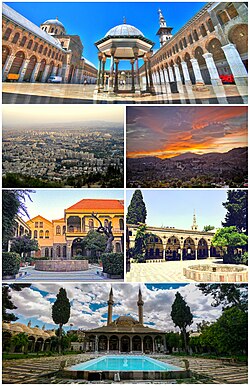 Historic
Damascus ( də-MASS-kəs or də-MAHS-kəs; Arabic: دمشق, romanized: Dimaşk Arabic pronunciation: [diˈmaʃq], Syrian Arabic: Arabic pronunciation: [dɪˈmaʃʔ], Classical Syriac: ܕܰܪܡܣܘܩ, romanized: Darmswq) is the capital of Syria, the oldest capital in the world and, according t…
Leggi su Wikipedia Battlefields
The siege of Damascus (634) lasted from 21 August to 19 September 634 before the city fell to the Rashidun Caliphate. Damascus was the first major city of the Eastern Roman Empire to fall in the Muslim conquest of Syria.The last of the Roman–Persian Wars ended in 628, after Heraclius concluded a s…
Leggi su Wikipedia National museums
The National Museum of Damascus (Arabic: الْمَتْحَفُ الْوَطَنِيُّ بِدِمَشْقَ) is a museum in the heart of Damascus, Syria.
Leggi su Wikipedia Religious Site
Our Lady of Saidnaya Patriarchal Monastery (Arabic: دير سيدة صيدنايا البطريركي) is a monastery of the Greek Orthodox Church of Antioch located in Saidnaya, Syria.
Leggi su Wikipedia Religious Site
Saidnaya (also transliterated Saydnaya or Sednaya from the Syriac: ܣܝܕܢܝܐ, Arabic: صيدنايا, romanized: Ṣaydnāyā) is a city located in the mountains, 1,500 m (4,900 ft) above sea level, 27 km (17 mi) north of the city of Damascus in Syria.
Leggi su Wikipedia Historic
Al-Rukniyah Madrasa (Arabic: الْمَدْرَسَة الرُّكْنِيَّة, romanized: al-Madrasah ar-Ruknīyah) is a 13th-century madrasah located in Damascus, Syria.Al-Adiliyah Madrasa Az-Zahiriyah Library Nur al-Din Madrasa
Leggi su Wikipedia Cultural
The Damascus Opera House (officially Dar al-Assad for Culture and Arts) (Arabic: دَارُ الْأَسَدِ لِلثَّقَافَةِ وَالْفُنُونِ) is the national opera house of Syria.
Leggi su Wikipedia Religious Site
The Mansouri Great Mosque (Arabic: المسجد المنصوري الكبير) is a mosque in Tripoli, Lebanon, also known simply as The Great Mosque of Tripoli. It was built in the Mamluk period, from 1294 to 1314.
Leggi su Wikipedia Fortifications
The Citadel of Raymond de Saint-Gilles, also known as Mons Peregrinus ("Pilgrim's Mountain"), Qala'at Sanjil and Qala'at Tarablus in Arabic, is a citadel and fort on a hilltop in Tripoli, Lebanon.
Leggi su Wikipedia Mountain peaks
Har Senaim or Senaim (Hebrew: הר סנאים, romanized: Har Senaʾim, lit. 'Mount of squirrels'; Arabic: Hafur el-Qurn, or Tell el-Hafur, or Arabic: جبل الحلاوة, romanized: Jabal Halawa, lit. 'Mountain of Sweetness'), is an archaeological site that sits on a peak near Mount Her…
Leggi su Wikipedia Battlefields
The Second Battle of Mount Hermon was fought on October 8, 1973, during the Yom Kippur War between the Syrian Army and the Israeli Army. After the IDF outpost on Mount Hermon was captured by Syria on October 6, Israel decided to launch a hasty counterattack.
Leggi su Wikipedia Historic
The Stone of the Pregnant Woman (Arabic: Hajar el Hibla) or Stone of the South is a Roman monolith in Baalbek (ancient Heliopolis), Lebanon. Together with another ancient stone block nearby, it is among the largest monoliths ever quarried.
Leggi su Wikipedia Religious Site
The Monastery of Mar Sarkis, Ehden (known also as Mar Sarkis, Ras Al Nahr, Arabic: دير القديسين سركيس و باخوس – رأس النهر) is a monastery located in the Zgharta District in the North Governorate of Lebanon.
Leggi su Wikipedia Architecture
Iaat (Arabic: إيعات also transliterated as Ya'ad, Yaad, Yaat, or Iaad) is a town and municipality located in the Beqaa Valley of Lebanon, famed for its Corinthian column: this is a single column of unknown date (but probably dated from Roman times), approximately half way between Baalbek and…
Leggi su Wikipedia Biographical museums
The Gibran Museum, formerly the Monastery of Mar Sarkis, is a biographical museum in Bsharri, Lebanon, 120 kilometres (75 mi) from Beirut.
Leggi su Wikipedia Roman bridges
The Leontes Bridge is a Roman bridge in Lebanon; it crosses the Litani River (the ancient Leontes) in the vicinity of Nahr Abou Assouad, 10 km north of Tyre.
Leggi su Wikipedia Battlefields
The Battle of Jezzine (13 June 1941) was part of the Australian 7th Division's advance on Beirut during the five-week-long Syria-Lebanon campaign by the Allies against Vichy French forces in Syria and Lebanon.
Leggi su Wikipedia Religious Site
Nabi Habeel Mosque (Arabic: مَسْجِد ٱلنَّبِي هَابِيْل, romanized: Masjid An-Nabī Hābīl; Turkish: Nabi Habeel Camii), or "Mosque of the Prophet Abel", is a shrine dedicated to Habeel, located on the west mountains of Damascus, near the Zabadani Valley, overlooking the vil…
Leggi su Wikipedia Historic
Qasr el Banat (Arabic: قصر البنات) is an ancient temple (probably Roman) situated 1.5 kilometres (0.93 mi) east of Chlifa in the Baalbek District of the Beqaa Governorate in the city of Qsarnaba (Lebanon).It is believed the site was called the "Castle of Virgins" and was the residence of vi…
Leggi su Wikipedia Religious Site
Qozhaya (Syriac: ܕܝܪܐ ܕܡܪܝ ܐܢܛܘܢܝܘܣ ܩܘܙܚܝܐ, Arabic: دير مار أنطونيوس قزحيا), also transliterated Qazahya is located in the Zgharta District in the North Governorate of Lebanon.
Leggi su Wikipedia Historic
Kasarnaba (Arabic: قصرنبا) is a town in Baalbek District, Baalbek-Hermel Governorate, Lebanon famous for its hilly terrain and Traditional Agricultural practices.The town is located at the shoulder of The Western Lebanese Mountain Range just to the East of Mount Sanine specifically and it o…
Leggi su Wikipedia Historic
Temnin el-Foka (Arabic: تمنين الفوقا) is a small village in the Baalbek District in Lebanon.Temnin el-Foqa was created during Roman times, but the original name is unknown.
Leggi su Wikipedia Battlefields
The Battle of Sultan Yacoub was a battle between Syria and Israel during the 1982 Lebanon War, which occurred near the village of Sultan Yacoub in the Lebanese Bekaa, close to the borders with Syria.
Leggi su Wikipedia Architecture
Niha (Arabic: نيحا [ˈniħa]) is a village in the Bekaa Valley about 8 km (5.0 mi) north of Zahlé. It is famous for its Roman archeological ruins in the outskirts, and in particular two lower Roman temples that date back to the 1st century AD.The name Niha is used by four Lebanese towns or v…
Leggi su Wikipedia Historic
Afqa (Arabic: افقا; also spelled Afka) is a village and municipality located in the Byblos District of the Keserwan-Jbeil Governorate, 71 kilometres (44 mi) northeast of Beirut in Lebanon. It has an average elevation of 1,200 meters above sea level and a total land area of 934 hectares.
Leggi su Wikipedia Mountain peaks
Barouk (Arabic: باروك) is a village in the Chouf District of Mount Lebanon Governorate in Lebanon. Barouk is located 52 kilometers southeast of Beirut. Its average elevation is 1000 to 1200 meters above sea level and its total land area consists of 2,762 hectares.
Leggi su Wikipedia Religious Site
Ghazir (Arabic: غزير) is a town and municipality in the Keserwan District of the Keserwan-Jbeil Governorate of Lebanon. It is located 27 kilometres (17 mi) north of Beirut. It has an average elevation of 380 meters above sea level and a total land area of 542 hectares (2.09 sq mi).
Leggi su Wikipedia Architecture
The Roman Berytus (Roman Baths) are located in the middle of downtown Beirut, Lebanon between Banks Street and Capuchin Street.
Leggi su Wikipedia Museum
Beirut Art Center is a space for exhibiting contemporary art in Beirut, LebanonBeirut Art Center opened to public in January 2009.
Leggi su Wikipedia Historic
Martyrs' Monument was built to honor the hanging of a cross-confessional group of Lebanese Patriots on May 6, 1916, who had spoken against Turkish rule by Ottoman General Jamal Pasha. It is located at what is now known as Martyrs' Square in the heart of downtown Beirut, Lebanon.
Leggi su WikipediaReligious SiteSaint George Greek Orthodox Cathedral (consecrated 1764, Arabic: كاتدرائية القديس جاورجيوس للروم الارثوذكس) is the seat of the Greek Orthodox Metropolitan bishop of the Greek Orthodox Archdiocese of Beirut and its dependencies.
Leggi su WikipediaTyre Coast Nature Reserve to the southeast of Tyre, Lebanon covers over 380 hectares (940 acres) and is divided into three zones: the tourism zone (public beaches, the old city and Souks, the ancient port), the agricultural and archaeological zone, and the Conservation zone that includes the Phoenic…
Leggi su WikipediaLebanon, officially the Lebanese Republic, is a country in the Levant region of West Asia. Situated at the crossroads of the Mediterranean Basin and the Arabian Peninsula, it is bordered by Syria to the north and east, Israel to the south, and the Mediterranean Sea to the west; Cyprus lies a short distance from the coastline. Lebanon has a population of more than five million and an area of 10,452 square kilometres (4,036 sq mi). Beirut is the country's capital and largest city.
Leggi su WikipediaResta connesso con un piano eSIM conveniente — attivazione istantanea, senza costi di roaming.
Vedi piani eSIM per LebanonDati da OpenTripMap & OpenStreetMap