 Palaces
Al Sakakini

Entdecken Sie die beliebtesten Attraktionen, Wahrzeichen und Sehenswürdigkeiten in Ägypten.
62 Orte zu besuchen
Palaces Religious Site
The Mosque of al-Zahir Baybars (Arabic: مسجد الظاهر بيبرس) is a mosque built in Cairo, Egypt by the Mamluk Sultan al-Zahir Baybars al-Bunduqdari (r. 1260-1277).
Auf Wikipedia lesen Museum
Beit El-Umma or Bayt al-Umma (House of the People) is a historic house museum and Saad Zaghlul biographical museum in Cairo, Egypt.Beit El-Umma, or House of the People, was built at the turn of the century as a residence for the nationalist leader of modern Egypt and founder of the Wafd party, Saad…
Auf Wikipedia lesen Palaces
The Dubara Palace is located at the Simon Bolivar square in the north part of the Garden City district in downtown Cairo, Egypt. It is used for an evangelical church school.
Auf Wikipedia lesen Fortifications
Bab al-Barqiyya was a gate in the city walls of Cairo, Egypt. It acted as one of the main eastern city gates until falling into disuse and disappearing. It was excavated and restored as part of the creation of Al-Azhar Park in the 2000s.
Auf Wikipedia lesen Religious Site
The Armenian Catholic Eparchy of Alexandria (or Iskanderiya) is a suffragan eparchy (Eastern Catholicdiocese) of the Armenian Catholic Church sui iuris (Armenian Rite in Armenian language), in the Patriarch's own 'ecclesiastical province of Cilicia' (actually based in Beirut, Lebanon), covering Egyp…
Auf Wikipedia lesen Religious Site
The Chaldean Catholic Eparchy of Cairo (French: Le Caire, Latin: Eparchia Cahirensis Chaldaeorum) is an eparchy of the Chaldean Catholic Church located in Cairo in Egypt.April 23, 1980: Established as Diocese of CairoMinor Basilicas: Cathedral of Our Lady of Fatima, CairoCathedral of Our Lady of Fat…
Auf Wikipedia lesen National museums
The Museum of Egyptian Antiquities, known commonly as the Egyptian Museum or the Cairo Museum , in Cairo, Egypt, is home to an extensive collection of ancient Egyptian antiquities. It has 120,000 items, with a representative amount on display and the remainder in storerooms.
Auf Wikipedia lesen Religious Site
The Mosque of al-Hakim (Arabic: مسجد الحاكم بأمر الله, romanized: Masjid al-Ḥākim bi Amr Allāh), nicknamed al-Anwar (Arabic: الانور, lit. 'the Illuminated'), is a major Islamic religious site in Cairo, Egypt.
Auf Wikipedia lesen Fountain
Sabil-Kuttab of Abd al-Rahman Katkhuda (Arabic: سبيل وكتاب عبدالرحمن كتخدا) is a historic monument in the historic district of Cairo, Egypt. It comprises a public fountain or sabil, an elementary Quran school or kuttab, and an adjacent residential wing.
Auf Wikipedia lesen Cultural
Talaat Harb Street (Arabic: شارع طلعت حرب pronounced [ˈtˤɑlʕɑt ˈħɑɾb]) is a historic street in downtown Cairo, Egypt, connecting Tahrir Square and Talaat Harb Square.Originally it was named 'Soliman Pasha Street' after Suleiman Pasha, Egypt's French-born General under Muhammad…
Auf Wikipedia lesen Religious Site
The Annunciation Cathedral (also called the Armenian Catholic Cathedral of Cairo) is a religious building affiliated with the Catholic Church that follows the Armenian rite and is located on Mohamed Sabri Street, Abou Alam, Abdine in Cairo, Egypt.The temple opened in 1926 serves as the headquarters…
Auf Wikipedia lesen Religious Site
The Qalawun complex (Arabic: مجمع قلاون) is a massive complex in Cairo, Egypt, built by Sultan al-Mansur Qalawun in 1284–1285. It is located at Bayn al-Qasrayn on al-Mu'izz street and includes a hospital (bimaristan), a madrasa and his mausoleum.
Auf Wikipedia lesen Religious Site
The Al-Ashraf Mosque (Arabic: مسجد ومدرسة الأشرف برسباي) or the Mosque-Madrasa of Sultan al-Ashraf Barsbay is a historical complex of mosque and madrasa located in Cairo, Egypt. The mosque was built during the Mamluk period by the Burji Sultan Al-Ashraf Al-Barsbay.
Auf Wikipedia lesen Palaces
Abdeen Palace (Arabic: قصر عابدين) is a historic Cairo palace, it was built as one of the official residences for the former ruling monarchy and royal family of Egypt.
Auf Wikipedia lesen Religious Site
The Maimonides Synagogue (Hebrew: בית כנסת הרמב"ם, translit: Bet Knesset ha-Rambam; Arabic: كنيس ابن ميمون), also known as the Rav Moshe Synagogue, is a historic synagogue located in Cairo, Egypt.
Auf Wikipedia lesen Other
OtherThe Faiyum Oasis (Arabic: واحة الفيوم Waḥet El Fayyum) is a depression or basin in the desert immediately to the west of the Nile south of Cairo in Egypt. The extent of the basin area is estimated at between 1,270 km2 (490 mi2) and 1700 km2 (656 mi2).
Auf Wikipedia lesen Cemeteries
Dahshur (in English often called Dashur; Arabic: دهشور Dahšūr pronounced [dɑhˈʃuːɾ], Coptic: ⲧⲁϩϭⲟⲩⲣ Dahchur) is a royal necropolis located in the desert on the west bank of the Nile approximately 40 kilometres (25 mi) south of Cairo.
Auf Wikipedia lesen Settlements
Memphis or Menefer (Arabic: مَنْف Manf pronounced [mænf]; Bohairic Coptic: ⲙⲉⲙϥⲓ; Greek: Μέμφις) was the ancient capital of Inebu-hedj, the first nome of Lower Egypt that was known as mḥw ("north").
Auf Wikipedia lesen Cemeteries
The East Field is located to the east of the Great Pyramid of Giza and contains cemetery G 7000. This cemetery was a burial place for some of the family members of Khufu. The cemetery also includes mastabas from tenants and priests of the pyramids dated to the 5th and 6th Dynasty.
Auf Wikipedia lesen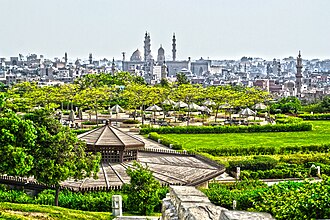 Urban
UrbanAl-Azhar Park (Arabic: حديقة الأزهر) is a public park located in Cairo, Egypt.Among several honors, this park is listed as one of the world's sixty great public spaces by the Project for Public Spaces.
Auf Wikipedia lesen Religious Site
The Mosque of Amir Qijmas al-Ishaqi (Arabic: مسجد قجماس الإسحاقي) or Abu Hurayba Mosque (Arabic: مسجد أبو حريبة) (sometimes written Abu Heriba) is a late Mamluk-era mosque in Cairo, Egypt.
Auf Wikipedia lesen Religious Site
The Imam Hussein Mosque (Arabic: مسجد الإمام ٱلحُسين) or Jame Sayyidna Husayn (Arabic: جامِع سيّدنا ٱلحُسين) is a mosque and mausoleum of Husayn ibn Ali, originally built in 1154, and then later reconstructed in 1874.
Auf Wikipedia lesen Architecture
Bayt Al-Suhaymi ("House of Suhaymi") is an Islamic themed house and museum in Cairo, Egypt. It was originally built in 1648 by Abdel Wahab el Tablawy along the Darb al-Asfar, a very prestigious and expensive part of Islamic Cairo.
Auf Wikipedia lesen Religious Site
Mosque-Sabil of Sulayman Agha al-Silahdar or Mosque-Sabil-Kuttab of Sulayman Agha al-Silahdar (Arabic: مسجد وسبيل سليمان أغا السلحدار) is a complex of mosque, sabil and kuttab established during the era of Muhammad Ali Pasha in Islamic Cairo, the historic medieval distri…
Auf Wikipedia lesen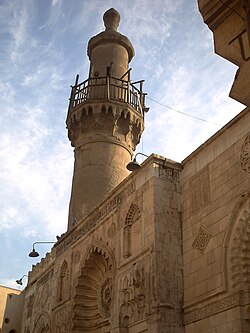 Religious Site
Al-jāmiʿ al-aqmar, or al-Aqmar Mosque (Arabic: الجامع الأقمر, literally: Moonlit mosque), was built in Cairo, Egypt, as a neighborhood mosque by the Fatimid vizier al-Ma’mun al-Bata’ihi in 1125-6 CE (519 Hijri).
Auf Wikipedia lesen Religious Site
Al-Fath Mosque (Arabic: مسجد الفتح) is a mosque in the city of Cairo. Located in the Ramses Square, it is among the largest mosques and equips the tallest minaret in the city and the 3rd tallest in the world.
Auf Wikipedia lesen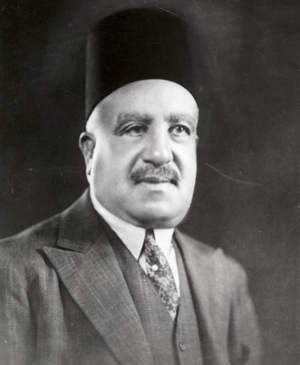 Cultural
Talaat Harb Pacha (Arabic: طلعت حرب باشا; 25 November 1867 - 13 August 1941) was a leading Egyptian entrepreneur and founder of Banque Misr, and its group of companies, in May 1920.The establishment of Banque Misr, the first real Egyptian bank owned by Egyptian shareholders and staffed…
Auf Wikipedia lesen Religious Site
The Sha'ar Hashamayim Synagogue (lit. Gate of Heaven) is located in Cairo, Egypt. The synagogue was also known as Temple Ismailia and the Adly Street Synagogue.Its long-time leader was Chief Rabbi Chaim Nahum. In 2008, the synagogue marked its 100th anniversary.
Auf Wikipedia lesen Entertainment
The Khedivial Opera House or Royal Opera House (Arabic: دار الأوبرا الخديوية / ALA-LC: Dār Awbirā al-Khudaywī) was an opera house in Cairo, Egypt, the oldest opera house in all of Africa.
Auf Wikipedia lesen Architecture
The Pyramid of Menkaure is the smallest of the three main Pyramids of Giza, located on the Giza Plateau in the southwestern outskirts of Cairo, Egypt. It is thought to have been built to serve as the tomb of the Fourth Dynasty Egyptian Pharaoh Menkaure.
Auf Wikipedia lesen Architecture
The Pyramid of Khafre or of Chephren (Arabic: هرم خفرع, romanized: haram ḵafraʿ, IPA: [haram xafraʕ]) is the second-tallest and second-largest of the 3 Ancient Egyptian Pyramids of Giza and the tomb of the Fourth-Dynasty pharaoh Khafre (Chefren), who ruled c. 2558−2532 BC.The pyram…
Auf Wikipedia lesen Cemeteries
The Giza pyramid complex, also called the Giza necropolis, is the site on the Giza Plateau in Greater Cairo, Egypt that includes the Great Pyramid of Giza, the Pyramid of Khafre, and the Pyramid of Menkaure, along with their associated pyramid complexes and the Great Sphinx of Giza.
Auf Wikipedia lesen Architecture
The Pyramid complex of Khentkaus I or Step tomb of Khentkaus I is a Fourth Dynasty two-stepped tomb built for the Queen Mother Khentkaus I in Giza. The tomb, built in two phases coinciding with its two steps, was originally known as the fourth pyramid of Giza.
Auf Wikipedia lesenHistoricThe Giza pyramid complex, also called the Giza necropolis, is the site on the Giza Plateau in Greater Cairo, Egypt that includes the Great Pyramid of Giza, the Pyramid of Khafre, and the Pyramid of Menkaure, along with their associated pyramid complexes and the Great Sphinx of Giza.
Auf Wikipedia lesen Architecture
The Great Pyramid of Giza (also known as the Pyramid of Khufu or the Pyramid of Cheops) is the oldest and largest of the pyramids in the Giza pyramid complex bordering present-day Giza in Greater Cairo, Egypt.
Auf Wikipedia lesen Historic
The Great Sphinx of Giza, commonly referred to as the Sphinx of Giza, Great Sphinx or just the Sphinx, is a limestone statue of a reclining sphinx, a mythical creature with the head of a man, and the body of a lion.
Auf Wikipedia lesen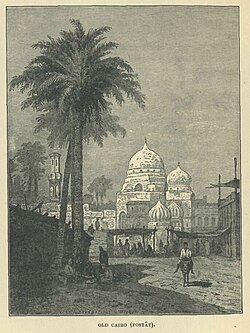 Historic
Fustat (Arabic: الفسطاط al-Fusṭāṭ, Coptic: ⲫⲩⲥⲧⲁⲧⲱⲛ [Phustaton]), also Fostat, Al Fustat, Misr al-Fustat and Fustat-Misr, was the first capital of Egypt under Muslim rule.
Auf Wikipedia lesen Religious Site
The Mosque of Amr ibn al-As (Arabic: جامع عمرو بن العاص), or Taj al-Jawame' (Arabic: تاج الجوامِع, lit. 'Crown of Mosques'), or Masjid Ahl ar-Rayah (Arabic: مسجد اهل الرّاية, lit. 'Mosque of the Banner Bearers'), or Jame’ al-Ateeq (Arabic: جا?…
Auf Wikipedia lesen Cemeteries
Mausoleum of Imam al-Shafi'i (Arabic: قبة الإمام الشافعي) is a mausoleum dedicated to Al-Shafi'i, the founder of the Shafi'i Sunni Islamic school of jurisprudence.
Auf Wikipedia lesen Religious Site
The Mosque of Ibn Tulun (Arabic: مسجد إبن طولون, romanized: Masjid Ibn Ṭūlūn) is located in Cairo, Egypt. It is one of the oldest mosques in Egypt as well as the whole of Africa surviving in its full original form, and is the largest mosque in Cairo in terms of land area.
Auf Wikipedia lesen Religious Site
Mosque of Qanibay al-Muhammadi (Arabic: مسجد قاني باي المحمدي) is one of the historical mosques in Cairo, Egypt, built in 1413 CE during the Burji dynasty era of Mamluk Sultanate.
Auf Wikipedia lesen Religious Site
The Mosque and Khanqah of Shaykhu is an Islamic complex in Cairo built by the Grand Emir Sayf al-Din Shaykhu al-Nasiri. The mosque was built in 1349, while the khanqah was built in 1355.
Auf Wikipedia lesen Religious Site
The Mosque-Madrasa of Sultan Hassan (Arabic: مسجد ومدرسة السلطان حسن) is a monumental mosque and madrasa located in the historic district of Cairo, Egypt. It was built between 1356 and 1363 during the Bahri Mamluk period, commissioned by Sultan an-Nasir Hasan.
Auf Wikipedia lesen Religious Site
Amir Khayrbak Funerary Complex, Mosque-Madrasa of Al-Amir Khair Bak or Khayrbak Mosque (Arabic: مسجد ومدرسة الأمير خاير بك) is a religious complex at Bab al-Wazir street (Darb al-Ahmar district), Islamic Cairo, Egypt.
Auf Wikipedia lesen Religious Site
The Aqsunqur Mosque (Arabic: مسجد آق, Turkish: Aksungur Camii; also known as the Blue Mosque (Arabic: الجامع الأزرق, Turkish: Mavi Cami) or the Mosque of Ibrahim Agha' (Arabic: مسجد إبراهيم أغا مستحفظان, Turkish: İbrahim Ağa Camii)) is located in Ca…
Auf Wikipedia lesen Religious Site
The Mosque of Al Salih Tala'i (Arabic: مسجد الصالح طلائع) is a late Fatimid-era mosque built by the vizier Tala'i ibn Ruzzik in 1160.
Auf Wikipedia lesen Cultural
The Beshtak Palace or Qasr Bashtak ("Palace of Bashtak") is a historic palace and museum in Cairo, Egypt, built by the Mamluk amir Sayf al-Din Bashtak al-Nasiri in the 14th century.
Auf Wikipedia lesen Fortifications
Bab Zuweila is one of three remaining gates in the walls of the Old City of Cairo, the capital of Egypt. It was also known as Bawabbat al-Mitwali during the Ottoman period, and is sometimes spelled Bab Zuwayla.
Auf Wikipedia lesen Religious Site
Mosque-Madrasa of Sultan Barquq or Mosque-Madrasa-Khanqah of Az-Zaher Barquq (Arabic: مسجد ومدرسة وخانقاه الظاهر برقوق) is a religious complex in Islamic Cairo, the historic medieval district of Cairo, Egypt.
Auf Wikipedia lesen Religious Site
The Madrasa of Al-Nasir Muhammad is a madrasa and mausoleum located in the Bayn al-Qasrayn area of al-Muizz street in Cairo, Egypt.
Auf Wikipedia lesen Religious Site
The Sultan Al-Ghuri Complex or Funerary complex of Sultan al-Ghuri, also known as al-Ghuriya, is a monumental Islamic religious and funerary complex built by Sultan Qansuh al-Ghuri between 1503 and 1505 CE.
Auf Wikipedia lesen Religious Site
The Mosque of Sultan al-Mu'ayyad (Arabic: مسجد السلطان المؤيد) is a Mosque in Cairo, Egypt next to Bab Zuwayla built under the rule of sultan Al-Mu'ayyad Sayf ad-Din Shaykh from whom it takes its name, "Al-Mu'ayyad", meaning The Supporter in Arabic language.
Auf Wikipedia lesen Religious Site
The Monastery of Saint Macarius The Great also known as Dayr Aba Maqār (Arabic: دير الأنبا مقار) is a Coptic Orthodox monastery located in Wadi El Natrun, Beheira Governorate, about 92 km (57 mi) north-west of Cairo, and off the highway between Cairo and Alexandria.
Auf Wikipedia lesen Religious Site
The Serapeum of Saqqara is a serapeum located north west of the Pyramid of Djoser at Saqqara, a necropolis near Memphis in Lower Egypt. It was a burial place of Apis bulls, sacred bulls that were incarnations of the ancient Egyptian deity Ptah.
Auf Wikipedia lesen Architecture
The Pyramid of Teti is a smooth-sided pyramid situated in the pyramid field at Saqqara in Egypt. It is the second known pyramid containing pyramid texts. Excavations have revealed a satellite pyramid, two pyramids of queens accompanied by cult structures, and a funerary temple.
Auf Wikipedia lesen Fortifications
Babylon Fortress (Arabic: حصن بابليون; Coptic: ⲡⲁⲃⲓⲗⲱⲛ or Ⲃⲁⲃⲩⲗⲱⲛ) is an ancient fortress in the Nile Delta, located in the area known today as Coptic Cairo.
Auf Wikipedia lesen Religious Site
Sultan Abu al-'Ila Mosque (Arabic: السلطان أبو العلا) is one of the most famous mosques in Islamic Cairo in Egypt. The mosque now bases on 23 pure white marble columns. The platform is a masterpiece made of Indian teak. The roof is plated in gold leaf with amazing tiny trappings.
Auf Wikipedia lesen Religious Site
The funerary complex of Sultan Qaytbay is an architectural complex built by Sultan al-Ashraf Qaytbay in Cairo's Northern Cemetery, completed in 1474.
Auf Wikipedia lesenAmir Alin Aq Palace (also known as Amir Khayrbak Palace, Emir Khayrbak Palace, or Amir Khayr Bek Palace) was built in 1293. It stands on the Darb al-Ahmar, the ceremonial road leading to the Citadel in Cairo, Egypt.
Auf Wikipedia lesenThe Musafir Khana Palace also known as the Musafirkana Palace was built in Cairo, Egypt between 1779 and 1788 by Mahmud Muharram; a wealthy merchant. Muhammad Ali Pasha bought the palace in early 19th century to use as a royal guesthouse.
Auf Wikipedia lesenThe Khanqah of Baybars II is a medieval building located on historic Sharia Gamaliya in Cairo, Egypt. It was built in 1309, in the medieval Islamic Cairo era, to accommodate four hundred Sufis and children of the Mamluks. This is the oldest khanqah, or hostel, that has survived in modern Cairo.
Auf Wikipedia lesenEgypt, officially the Arab Republic of Egypt, is a country spanning the northeast corner of Africa and southwest corner of Asia via the Sinai Peninsula. It is bordered by the Mediterranean Sea to the north, Palestine and Israel to the northeast, the Red Sea to the east, Sudan and the Sahara to the south, and Libya to the west. The Gulf of Aqaba in the northeast separates Egypt from Jordan and Saudi Arabia.
Auf Wikipedia lesenBleiben Sie verbunden mit einem günstigen eSIM-Tarif — sofortige Aktivierung, keine Roaming-Gebühren.
eSIM-Tarife für Ägypten ansehenDaten von OpenTripMap & OpenStreetMap