
 Palaces
Esterházy Palace, Budapest

Entdecken Sie die beliebtesten Attraktionen, Wahrzeichen und Sehenswürdigkeiten in Ungarn.
49 Orte zu besuchen
Palaces Cultural
House of Terror is a museum located at Andrássy út 60 in Budapest, Hungary. It contains exhibits related to the fascist and communist regimes in 20th-century Hungary and is also a memorial to the victims of these regimes, including those detained, interrogated, tortured or killed in the building.T…
Auf Wikipedia lesen Cultural
Ferenc Hopp Museum of Asiatic Arts is an art museum in Budapest, Hungary.Official website
Auf Wikipedia lesen Religious Site
Kazinczy Street Synagogue is an Art Nouveau orthodox synagogue built between 1912 and 1913 Budapest VII. district, 29-31 Kazinczy Street number. It is one of the most characteristic works of Hungarian synagogue architecture before the First World War.
Auf Wikipedia lesen Religious Site
The Queen of the Rosary Church is an historic Roman Catholic Church in Budapest, Hungary.The church was designed by Ferenc Paulheim and built by Antal Hofhauser between 1912 and 1915.
Auf Wikipedia lesen Religious Site
The Budapest University of Jewish Studies (Hungarian: Országos Rabbiképző – Zsidó Egyetem, or Országos Rabbiképző Intézet / Jewish Theological Seminary – University of Jewish Studies / German: Landesrabbinerschule in Budapest) is a university in Budapest, Hungary.
Auf Wikipedia lesen Religious Site
The Reformed Church of Fasor or Fasor Reformed Church (Fasori református templom) is an Art Nouveau Protestant church in District VII of Budapest, designed by Aladár Árkay in 1910-1912.
Auf Wikipedia lesen Cultural
The Erkel Theatre is a theatre in Budapest, Hungary. Being the largest public building in the city for decades (and the largest theatre in the city), it was made part of the Hungarian State Opera House in 1951.With the idea of bringing opera to the masses for cheap, originally named Népopera (The P…
Auf Wikipedia lesen Architecture
The Stalin Monument was a statue of Joseph Stalin in Budapest, Hungary. Completed in December 1951 as a "gift to Joseph Stalin from the Hungarians on his seventieth birthday", it was torn down on October 23, 1956 by enraged anti-Soviet crowds during Hungary's October Revolution.
Auf Wikipedia lesen Puppetries
The Budapest Puppet Theater (Hungarian: Budapest Bábszínház) has been open since 1949, with its primary venue currently situated at 69 Andrássy út, Budapest.
Auf Wikipedia lesen Other
OtherThe Liszt Ferenc Academy of Music (Hungarian: Liszt Ferenc Zeneművészeti Egyetem, often abbreviated as Zeneakadémia, "Liszt Academy") is a music university and a concert hall in Budapest, Hungary, founded on November 14, 1875.
Auf Wikipedia lesen Cemeteries
Kerepesi Cemetery (Hungarian: Kerepesi úti temető or Kerepesi temető, official name: Fiumei úti nemzeti sírkert, i.e. "Fiume Road National Graveyard") is the most famous cemetery in Budapest. It is one of the oldest cemeteries in Hungary, and has been almost completely preserved.
Auf Wikipedia lesen Historic
Sándor Vándor (1901–1945) was a Hungarian Jewish composer. His "Air" for cello piccolo and piano is featured on the 2008 album In Memoriam: Hungarian Composers, Victims Of The Holocaust.
Auf Wikipedia lesen Accomodations
The New York Palace is a luxury hotel on the Grand Boulevard of Budapest's Erzsébet körút part, under Erzsébet körút 9–11, in the 7th district of Budapest, Hungary.
Auf Wikipedia lesen Railway stations
Budapest eastern railway station (Hungarian: Keleti pályaudvar) is the main international and inter-city railway terminal in Budapest, Hungary.The station stands where Rákóczi út splits to become Kerepesi Avenue and Thököly Avenue. Keleti pályaudvar translates to Eastern Railway Terminus.
Auf Wikipedia lesen Historic
The Castle Quarter (Hungarian: Várnegyed) refers to the part of Budapest located within the defensive walls of the Buda Castle complex, corresponding with the medieval royal city of Buda.
Auf Wikipedia lesen Historic
Józef Zachariasz Bem (Hungarian: Bem József, Turkish: Murat Pasha; March 14, 1794, Tarnów – December 10, 1850, Aleppo) was a Polish engineer and general, an Ottoman pasha and a national hero of Poland and Hungary, and a figure intertwined with other European patriotic movements.
Auf Wikipedia lesen Religious Site
The St. Catherine of Alexandria Church (Hungarian: Alexandriai Szent Katalin-templom, German: Pfarrkirche zur heiligen Katharina) is a Roman Catholic church in the Tabán quarter of Budapest, Hungary.
Auf Wikipedia lesen Architecture
The Hungarian Parliament Building (Hungarian: Országház [ˈorsaːkhaːz], which translates to "House of the Country" or "House of the Nation"), also known as the Parliament of Budapest after its location, is the seat of the National Assembly of Hungary, a notable landmark of Hungary, and a popular…
Auf Wikipedia lesen Architecture
Rudas Bath or Rudas fürdő is a thermal bath in Budapest, Hungary which is claimed to have medicinal properties. It was first built in 1550, during the time of Ottoman rule. To date, it retains many of the key elements of a Turkish bath, exemplified by its Turkish dome and octagonal pool.
Auf Wikipedia lesen Science museums
The Geological Museum of Budapest or Hungarian Institute of Geology and Geophysics is the main museum of geology in Hungary. It is located on the Stefánia út in the western part of Pest.The building was originally the home of the Hungarian Geological Society, which was established in 1869.
Auf Wikipedia lesen Cultural
Tamás Cseh (22 January 1943 in Budapest – 7 August 2009 in Budapest) was a Hungarian composer, singer and actor. He won the Kossuth Prize and also the Liszt Ferenc prize.From 1967 to 1974 he taught art at a primary school in Budapest.
Auf Wikipedia lesen Historic
The original 50 cm statuette of the Little Princess (Kiskirálylány) Statue sitting on the railings of the Danube promenade in Budapest, Hungary was created by László Marton (1925–2008) Munkácsy- and Kossuth Prize-winning sculptor in 1972.The artist was inspired by his eldest daughter born fro…
Auf Wikipedia lesen Historic
Count Gyula Andrássy de Csíkszentkirály et Krasznahorka (8 March 1823 – 18 February 1890) was a Hungarian statesman, who served as Prime Minister of Hungary (1867–1871) and subsequently as Foreign Minister of Austria-Hungary (1871–1879).
Auf Wikipedia lesen Religious Site
The Our Lady of the Snows Parish Church formerly called as the Blood Chapel, also called Krisztina Church (Hungarian: krisztinavárosi Havas Boldogasszony-plébániatemplom), is a Catholic Church located in the Krisztina Square, Krisztinaváros, Várkerület District (Buda Castle District), Budapest…
Auf Wikipedia lesen Architecture
Erdélyi Bastion is a bastion at Buda Castle in Budapest, Hungary. It is sometimes called in English the Transylvanian bastion.It is the strongest part of the fortification South from Vienna Gate. Its floor plan is multi cornered; it looks like an Old Italian fortification.
Auf Wikipedia lesen Historic
Attila József (Hungarian: [ˈɒtillɒ ˈjoːʒɛf]; 11 April 1905 – 3 December 1937) is one of the most famous Hungarian poets of the 20th century.
Auf Wikipedia lesen Fortifications
The Hospital in the Rock Nuclear Bunker Museum (Hungarian: Sziklakórház Atombunker Múzeum) is the name given to a hospital created in the caverns under Buda Castle in Budapest in the 1930s, in preparation for the Second World War.Dr.
Auf Wikipedia lesen Historic
William Tierney Clark FRS FRAS (23 August 1783 – 22 September 1852) was an English civil engineer particularly associated with the design and construction of bridges.
Auf Wikipedia lesen Religious Site
The Church of the Assumption of the Buda Castle (Hungarian: Nagyboldogasszony-templom), more commonly known as the Matthias Church (Hungarian: Mátyás-templom), more rarely the Coronation Church of Buda, is a Roman Catholic church located in the Holy Trinity Square, Budapest, Hungary, in front of t…
Auf Wikipedia lesen Other
OtherThe Hungarian Academy of Sciences (Hungarian: Magyar Tudományos Akadémia (MTA)) is the most important and prestigious learned society of Hungary. Its seat is at the bank of the Danube in Budapest, between Széchenyi rakpart and Akadémia utca.
Auf Wikipedia lesen Architecture
The Budapest Castle Hill Funicular or Budavári Sikló is a funicular railway in the city of Budapest, in Hungary. It links the Adam Clark Square and the Széchenyi Chain Bridge at river level to Buda Castle above.The line was opened on March 2, 1870, and has been in municipal ownership since 1920.
Auf Wikipedia lesen Palaces
The Sándor Palace (Hungarian: Sándor-palota) is a palace in Budapest, Hungary. Located beside the Buda Castle complex in the ancient Castle District, it has served as the official residence and workspace of the President of Hungary since 2003.Sándor Palace is the 37th largest palace in present-da…
Auf Wikipedia lesen Entertainment
Carmelite Church of Buda (natively: Karmelita kolostor) is the current seat of the Prime Minister of Hungary. The monastery was built in 1736 by the Carmelite order on the former site of a mosque that was destroyed in 1686 during the siege that liberated Buda from Ottoman occupation.
Auf Wikipedia lesen Historic
Sándor József Hollán the Elder (15 March 1846 – 22 April 1919) was a Hungarian politician and state secretary.Hollán was born in Kiscell (now: Celldömölk) to Adolf Hollán, a Hungarian physician and Jozefa Pingitzer.
Auf Wikipedia lesen Historic
The Zero Kilometre Stone is a 3 m high limestone sculpture in Budapest, forming a zero sign, with an inscription on its pedestal reading "KM" for kilometres. This stone marks the reference point from which all road distances to Budapest are measured in the country.
Auf Wikipedia lesen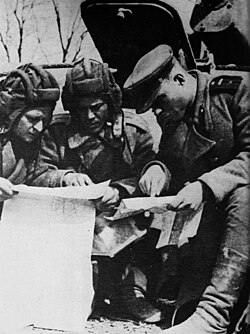 Battlefields
The Siege of Budapest or Battle of Budapest (Hungarian: Budapest ostroma) was the 50-day-long encirclement by Soviet and Romanian forces of the Hungarian capital of Budapest, near the end of World War II.
Auf Wikipedia lesen Architecture
Andrássy Avenue (Hungarian: Andrássy út) is a boulevard in Budapest, Hungary, dating back to 1872. It links Erzsébet Square with the Városliget.
Auf Wikipedia lesen Cultural
The Museum of Applied Arts (Hungarian: Iparművészeti Múzeum) is a museum in Budapest, Hungary. It is the third-oldest applied arts museum in the world.The museum was built between 1893 and 1896 and was designed by Ödön Lechner in the Hungarian Secession style.
Auf Wikipedia lesenCulturalThe Hungarian University of Fine Arts (Hungarian: Magyar Képzőművészeti Egyetem, MKE) is the central Hungarian art school in Budapest, Andrássy Avenue.
Auf Wikipedia lesen Geological formations
The Molnár János Cave is a thermokarstic water-filled cave system. It is located in the Rózsadomb district of Budapest in Hungary.The deepest sections reach 100 metres (330 ft), while the total length of explored sections is currently 5.5 kilometres (3.4 mi).
Auf Wikipedia lesen Historic
Gül Baba's tomb (türbe) in Budapest, Hungary, is the northernmost Islamic pilgrimage site in the world. The mausoleum is located in the district of Rózsadomb on Mecset (mosque) Street, a short but steep walk from Margaret Bridge.Gül Baba was a member of the Bektás Dervish Order, who died in Ott…
Auf Wikipedia lesen Cultural
The Comedy Theatre of Budapest (Hungarian: Vígszínház) is a theatre in Budapest. Starting in the turn of the 19th and 20th century as an opposition to the conservative National Theatre, it became a pioneer institution of Hungarian drama, and one of the oldest theatres of the city still in operati…
Auf Wikipedia lesen Palaces
Buda Castle (Hungarian: Budavári Palota, German: Burgpalast) is the historical castle and palace complex of the Hungarian kings in Budapest. It was first completed in 1265, but the massive Baroque palace today occupying most of the site was built between 1749 and 1769.
Auf Wikipedia lesen Religious Site
Szilágyi Dezső Square Reformed Church is a Protestant church in Budapest. It was built by Samu Pecz from 1894 to 1896.Media related to Szilágyi Dezső tér Reformed Church at Wikimedia Commons
Auf Wikipedia lesen Bridge
The Széchenyi Chain Bridge (Hungarian: Széchenyi lánchíd [ˈseːt͡ʃeːɲi ˈlaːnt͡shiːd]) is a chain bridge that spans the River Danube between Buda and Pest, the western and eastern sides of Budapest, the capital of Hungary.
Auf Wikipedia lesen Historic
Count István Széchenyi de Sárvár-Felsővidék (Széchenyi István, sárvár-felsővidéki gróf Széchenyi István Hungarian: [ˈʃɑ̈ˑrvɑ̈ˑrˌfelʃøˑvidɛːki ˌɡroːf ˈse̝ːt͡ʃe̝ːɲi ˌiʃtvɑ̈ːn], archaically English: Stephen Széchenyi; 21 September 1791 – 8 April 1860) was…
Auf Wikipedia lesen Historic
Georgios Sinas (Greek: Γεώργιος Σίνας, German: Georg Sina; 20 November 1783 – 18 May 1856) was a Greek-Austrian entrepreneur and banker. He became a national benefactor of Greece and was the father of another Greek national benefactor, Simon Sinas.
Auf Wikipedia lesenTabán usually refers to an area within the 1st district of Budapest, the capital of Hungary. It lies on the Buda (i.e. Western) side of the Danube, to the south of György Dózsa Square, on the northern side of Elisabeth Bridge and to the east of Naphegy.
Auf Wikipedia lesenHungary is a landlocked country in Central Europe. Spanning much of the Carpathian Basin, it is bordered by Slovakia to the north, Ukraine to the northeast, Romania to the east and southeast, Serbia to the south, Croatia and Slovenia to the southwest, and Austria to the west. Hungary lies within the Danube River's drainage basin and is dominated by great lowland plains. It has a population of over 9.5 million, consisting mostly of ethnic Hungarians (Magyars) and a significant Romani minority.
Auf Wikipedia lesenBleiben Sie verbunden mit einem günstigen eSIM-Tarif — sofortige Aktivierung, keine Roaming-Gebühren.
eSIM-Tarife für Ungarn ansehenDaten von OpenTripMap & OpenStreetMap