
 Historic architecture
bâtiment du Manège

Entdecken Sie die beliebtesten Attraktionen, Wahrzeichen und Sehenswürdigkeiten in Serbien.
72 Orte zu besuchen
Historic architecture Religious Site
Sukkat Shalom Synagogue or Belgrade Synagogue (Serbian: Београдска синагога / Beogradska sinagoga) is currently the only fully active Jewish place of worship in Serbian capital Belgrade, as other synagogues citywide are not active.
Auf Wikipedia lesen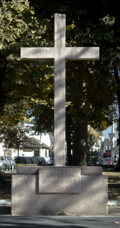 Architecture
Vozarev Cross (Serbian: Возарев крст, romanized: Vozarev krst) is located in Belgrade, in the park between Vojvode Šupljikca Street and Mileševska Street (municipality of Vračar), and it was erected in 1847. It represents the immovable cultural property as the cultural monument.
Auf Wikipedia lesen Palaces
Ilija M. Kolarac Endowment (Serbian: Задужбина Илије М. Коларца), also known as the Kolarac People's University Building, is at 5 Students' Square in the heart of Belgrade.
Auf Wikipedia lesen Historic architecture
Krsmanović's House, situated at 34 Terazije Street in Belgrade, was built in 1885 for a merchant. In 1918, it became the house of Alexander Karađorđević, Prince Regent of Yugoslavia and was used as a theatre before it became public property after World War II.
Auf Wikipedia lesen Cultural
The Ethnographic Museum (Serbian Cyrillic: Етнографски музеј) is a museum located in Belgrade, the capital of Serbia. It is one of the oldest museums in the Balkans.
Auf Wikipedia lesen Historic architecture
"Stanković" Music School in Belgrade, founded in 1911, under the auspices of King Peter I, as a musical and teaching institution. It is one of the oldest educational institutions in Belgrade. When it was established, it operated within the Choral Society "Stanković".
Auf Wikipedia lesen Historic architecture
The Agrarian Bank Building, located at the corner of Nikole Pašića Square and Vlajkovićeva Street, in the territory of the municipality of Stari Grad, in Belgrade, has the status of a cultural monument. It was built to according to the project by architects Petar and Branko Krstić.
Auf Wikipedia lesen Historic architecture
Pavlović`s family house family is situated in Belgrade, at 39 Gospodar Jevremova Street, and it has the status of the cultural monument. The house was built in 1882as a ground-floor family house of Kosta St.
Auf Wikipedia lesen Religious Site
The St. Mark's Church or the Church of St. Mark (Serbian Cyrillic: Црква Светог Марка, romanized: Crkva Svetog Marka) is a Serbian Orthodox church located in the Tašmajdan park in Belgrade, Serbia, near the Parliament of Serbia.
Auf Wikipedia lesen Historic architecture
Elementary school at Dorćol is located in Belgrade, in 23, Cara Dušana Street, and it has the status of a cultural monument.
Auf Wikipedia lesen Architecture
„Cvijeta Zuzorić“ Art Pavilion (Serbian: Уметнички павиљон "Цвијета Зузорић", Umetnički paviljon "Cvijeta Zuzorić") is an exhibition building in Belgrade, in Kalemegdan, situated in the park's section of Little Kalemegdan, next to the south-eastern front of the B…
Auf Wikipedia lesen Historic architecture
Building of Merchant Stamenković is located in Belgrade, in 41, Kralja Petra Street and it has the status of a cultural monument. The building of Merchant Stamenković was built in 1907 according to the project by the architects Аndra Stevanović and Nikola Nestorović.
Auf Wikipedia lesen Historic architecture
The House of Vuk's Foundation is the name of a historical building in Belgrade, built in 1879, that serves as the headquarters of the Vuk's Foundation. Located on the Теrazije at 2 Kralja Milana Street, it is one of the oldest structures in that part of Belgrade.
Auf Wikipedia lesen Historic architecture
The Krstic Brothers' House is located in Belgrade, at the King Milutin street no.5, since 1973, with the status of cultural heritage. The house was built in the late 19th century as a representative of a residential buildings.
Auf Wikipedia lesen Historic
The photographic studio of Milan Jovanović was constructed in 1903 as the first and so far the only structure built for the purpose of taking and developing photographs.
Auf Wikipedia lesen Historic architecture
Nikola Spasić Endowment Building in Belgrade, 33, Knez Mihailova Street, was built in 1889 and it is a сultural monument of exceptional importance.Nikola Spasić (1838—1916) was a Serbian wholesaler, benefactor and a large endower.
Auf Wikipedia lesen Historic architecture
Belgrade Town Hall building is located at 1 Uzun Mirkova Street, in Belgrade, and has the status of the cultural monument. It was built around 1846, during the reign of Prince Aleksandar Karađorđević, and is located on the site of the former Great bazaar.
Auf Wikipedia lesen Historic architecture
The building of the Pension Fund of the clerks and servants of the National Bank of Yugoslavia, today the building of the popular „Theatre-on-Terazije“, was built in 1939, after the design of the Russian architect Grigorije Samojlov.
Auf Wikipedia lesen Historic architecture
Ruski Car or Russian Tsar (Serbian: Руски цар) is a commercial-residential building and a restaurant in downtown Belgrade, the capital of Serbia. It is located in Knez Mihailova Street, a pedestrian zone and a commercial hub of the city.
Auf Wikipedia lesen Historic architecture
The Mansion of Miša Anastasijević (Serbian: Капетан Мишино здање, romanized: Kapetan Mišino zdanje) is one of the most notable buildings in Belgrade, Serbia. It is the University of Belgrade's administration and governance building.
Auf Wikipedia lesen Historic architecture
Palace Albanija (Serbian: Палата Албанија, Palata Albanija) is a high-rise building in Belgrade, Serbia. Important construction and architectural innovations were incorporated into the project, which made Albanija an exceptional building endeavor in the Balkans.
Auf Wikipedia lesen Historic
Monument to Josif Pančić was erected in Belgrade in the memory of Јоsif Pančić (1814–1888), a Serbian doctor, scientist, botanist and the first president of Serbian Royal Academy. The monument is located in the Academy Park and has the status of the cultural monument.
Auf Wikipedia lesen Historic
The monument to Jovan Cvijić is a monument dedicated to Jovan Cvijić in Belgrade, Serbia, located in the Academy Park in the neighborhood of the University of Belgrade.The area around Students' Park from the mid-18th century appears as the urban rectangular shape which served as the Turkish cemete…
Auf Wikipedia lesen National museums
The National Museum of Serbia (Serbian: Народни музеј Србије / Narodni muzej Srbije) is the largest and oldest museum in Belgrade, Serbia.
Auf Wikipedia lesen Historic
The monument to Dositej Obradović is located in the Academy Park, Belgrade, Serbia. Obradović was Serbian writer, educator and the reformer from the revolutionary period of the national awakening and rebirth.
Auf Wikipedia lesen Historic
Prince Mihailo Monument (Serbian: Споменик кнезу Михаилу, romanized: Spomenik knezu Mihailu) is a monument of Prince Mihailo. It is located in the main Republic Square in Belgrade, Serbia, and was erected in 1882.
Auf Wikipedia lesen Religious Site
The Bajrakli Mosque (Serbian: Бајракли џамија, romanized: Bajrakli džamija; named in Turkish as Bayraklı, bayrak is Turkish for "flag" and Bayraklı means "with flag") is a mosque in Belgrade, the capital of Serbia.
Auf Wikipedia lesen Historic architecture
Velika Škola Building is located in Belgrade, at 22 Gospodar Jevremova Street, as a building significant for the beginning of the high education in Serbia, as well as for famous historical persons who lived in it, it was declared a cultural monument.
Auf Wikipedia lesen Historic architecture
The House of the National Assembly of the Republic of Serbia (Serbian: Дом Народне скупштине Републике Србије, romanized: Dom Narodne skupštine Republike Srbije) is the seat of the National Assembly of Serbia.
Auf Wikipedia lesen Cultural
The Museum of Theatrical Arts of Serbia (Serbian Cyrillic: Музеј позоришне уметности Србије) is a museum located in Belgrade, the capital of Serbia.
Auf Wikipedia lesen Cultural
The Museum of Vuk and Dositej (Serbian: Музеј Вука и Доситеја / Muzej Vuka i Dositeja) is one of the most important memorial museums in Belgrade, the capital of Serbia.
Auf Wikipedia lesen Historic
The cultural-historical complex in the area around Dositej's Lyceum is one of the oldest and most important city parts in Belgrade, which centre formed at the end of the 18th and beginning of the 19th century.
Auf Wikipedia lesen Historic architecture
"Saint Sava" House is in Belgrade, at 13 Cara Dušana Street; it was built in 1890. By its volume and architectural features, the building is an established cultural property and has the status of a monument of culture.The name "Saint Sava" House is printed on the attic, on the main facade, above th…
Auf Wikipedia lesen Cultural
Cinema "Balkan" (Serbian: Биоскоп "Балкан", Bioskop "Balkan") is located in Belgrade at 16 Braće Jugovića Street.
Auf Wikipedia lesen Historic architecture
House of Milan Piroćanac is located in Belgrade, at the corner of Francuska and Simina streets, and it has the status of a cultural monument.The house was built around 1884 for Milan Piroćanac, presumably by architect Јоvan Ilkić, as a typical example of the representative urban architecture of…
Auf Wikipedia lesen Historic
The Old Telephone Exchange (Serbian: Зграда старе телефонске централе у Београду) is a building located in Belgrade, Serbia, at 47 Kosovska Street.
Auf Wikipedia lesen Fountain
The Čukur Fountain (Serbian: Чукур чесма/Čukur česma) is a monument built to commemorate the Čukur Fountain incident of 15 June 1862, starting with the death of a boy -- Savo Petković -- and growing into a conflict between Serbia and the Ottoman Empire (Serbia being under Ottoman suze…
Auf Wikipedia lesen Historic architecture
House of Stevan Mokranjac in Belgrade is significant as the house where the famous composer Stevan Stojanović Mokranjac lived and worked, during his stay in Belgrade.
Auf Wikipedia lesen Historic architecture
Nikola Pašić's House (Serbian: Кућа Николе Пашића, Kuća Nikole Pašića) is located at 21 Francuska Street, in Belgrade, the capital of Serbia. Originally built in 1872 and thoroughly expanded in 1921, it was purchased by the longtime prime minister Nikola Pašić in 1893.
Auf Wikipedia lesen Museum
Jovan Cvijić's house is situated in Belgrade, in 5 Jelena Ćetković Street. The house was built in 1905, on the site of the former garden of Мitropolit Mihailo of Belgrade, which in 1907 was transformed into the square.
Auf Wikipedia lesen Architecture
First Belgrade Gymnasium (Serbian Cyrillic: Прва београдска гимназија) is a gymnasium (Central European type of grammar school) with a long tradition, founded in 1839 in Belgrade, Serbia. Since 1938, it is situated in the center of the city, on 61 Cara Dušana Street.
Auf Wikipedia lesen Religious Site
The Church of St. Alexander Nevsky (Serbian: Црква Светог Александра Невског ) is a Serbian Orthodox church in Belgrade, Serbia.
Auf Wikipedia lesen Historic architecture
The First Town Hospital (Serbian: Прва варошка болница, Prva varoška bolnica) was built in Belgrade, the capital of Serbia in 1868.
Auf Wikipedia lesen Historic
Roman tomb in Brestovik (Serbian: Римска гробница у Брестовику) is an ancient tomb, dating from c. 300, which was discovered in 1895 in Brestovik, today a suburban village of Belgrade, the capital of Serbia.
Auf Wikipedia lesen Bridge
The Pupin Bridge (Serbian Cyrillic: Пупинов мост, romanized: Pupinov most) is a road bridge over the Danube River in Belgrade, Serbia. The bridge is located upstream of the city center and connects Belgrade neighbourhoods of Zemun and Borča. It is part of Semi-Inner Ring circle.
Auf Wikipedia lesen Museum
Adligat is a civil society organization which operates in the area of culture, arts and furthering the international cooperation of Serbia and the rest of the world.
Auf Wikipedia lesen Religious Site
Church of Saint Basil of Ostrog is a Serbian Orthodox Church located in Bežanijska Kosa neighbourhood of New Belgrade. Its construction started in 1996 and completed in 2001, and is the first church built in New Belgrade since World War II.
Auf Wikipedia lesen Cultural
Čukarica (Serbian Cyrillic: Чукарица, pronounced [t͡ʃukǎrit͡sa]) is a municipality of the city of Belgrade.Like several other neighborhoods of Belgrade, Čukarica was named after kafana.
Auf Wikipedia lesen Palaces
The Royal compound (Serbian: Краљевски комплекс, romanized: Kraljevski kompleks) is a complex of residences built with the personal funds of King Alexander I for the Karađorđević royal family between 1924 and 1937.
Auf Wikipedia lesen Palaces
The White Palace (Serbian: Бели двор, Beli dvor) is the official residence of the Yugoslav former royal family (the Royal House of Karageorgevich).
Auf Wikipedia lesen Palaces
The Royal Palace (Serbian: Краљевски двор / Kraljevski dvor) is the official residence of the Karađorđević royal family. The Royal Palace was built between 1924 and 1929 with the private funds of His Majesty King Alexander I (the grandfather of HRH Crown Prince Alexander).
Auf Wikipedia lesen Bridge
New Railway Bridge (Serbian: Нови железнички мост, romanized: Novi železnički most) is a cable-stayed bridge over the Sava river in Belgrade, the capital of Serbia.
Auf Wikipedia lesen Cultural
Sava Centar (Serbian: Сава центар) is an international congress, cultural and business centre of various multi-functional activities located in Belgrade, the capital of Serbia. It is the largest audience hall in the country and entire former Yugoslavia and one of the biggest in Europe.
Auf Wikipedia lesen Cultural
The Museum of Yugoslavia (Serbian: Музеј Југославије, romanized: Muzej Jugoslavije) is a public history museum in Belgrade, the capital of Serbia. It chronicles the period of Kingdom of Yugoslavia and Socialist Yugoslavia as well as the life of Josip Broz Tito.
Auf Wikipedia lesen Urban
UrbanHyde Park (Serbian: Хајд парк / Hajd park) is a park in suburban Belgrade, Serbia. It is situated in the municipality of Savski Venac, on the northern slopes of Topčider Hill.
Auf Wikipedia lesen Bridge
Old Railroad Bridge (Serbian: Стари железнички мост, romanized: Stari železnički most) is a bridge over the Sava river in Belgrade, the capital of Serbia. It was the first railway bridge in Belgrade and today is one of two across the Sava, and three in general.
Auf Wikipedia lesen Bridge
The Gazela Bridge (Serbian: Mост Газела, romanized: Most Gazela) is the most important bridge over the Sava river in Belgrade, the capital of Serbia.
Auf Wikipedia lesen Park
ParkThe Topovske Šupe concentration camp (German: Konzentrationslager Kanonen-Schuppen; Serbian: Logor Topovske Šupe, Логор Топовске Шупе) was a concentration camp located on the outskirts of Belgrade which was operated by Nazi Germany with the help of Milan Nedić's quisling governme…
Auf Wikipedia lesen Skyscrapers
The Ušće Towers (Serbian Cyrillic: Пословни центар Ушће, romanized: Poslovni centar Ušće) are two 25-story mixed-use skyscrapers located at Mihajlo Pupin Boulevard in the New Belgrade municipality of Belgrade, Serbia.
Auf Wikipedia lesen Historic
The Eternal Flame (Serbian: Вечна ватра, romanized: Večna vatra) is a memorial in the Park of Friendship in Belgrade, Serbia.
Auf Wikipedia lesen Cultural
Natural History Museum (Serbian: Природњачки музеј / Prirodnjački muzej) is a museum located in Belgrade, Serbia. It is one of the oldest specialized national institutions in Serbia.
Auf Wikipedia lesen Cultural
Yugoslav Drama Theatre (Serbian: Југословенско драмско позориште, romanized: Jugoslovensko dramsko pozorište; abbr. JDP or Jugodrp) is a theatre located in Belgrade, Serbia.It was founded in 1947 as the representative theater of new Yugoslavia.
Auf Wikipedia lesen Religious Site
The Church of the Holy Trinity, also called the Russian Church, in Belgrade is a metochion of the Russian Orthodox church in Belgrade, Serbia.
Auf Wikipedia lesen Historic
Dragutin Gavrilović (Serbian Cyrillic: Драгутин Гавриловић; 25 May 1882 – 19 July 1945) was a Serbian and Yugoslav military officer, best known for his heroic defense of Belgrade during the First World War.Dragutin Gavrilović was born in Čačak, Serbia, in 1882.
Auf Wikipedia lesen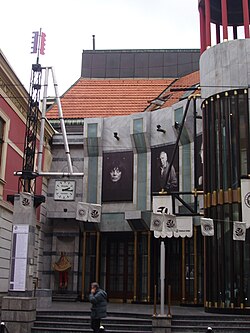 Cultural
Atelje 212 (Serbian Cyrillic: Атеље 212) is a theatre located in Belgrade, Serbia.Established in 1956 on the premises of the Borba building in front of 212 chairs, its opening play was the staging of Johann Wolfgang von Goethe's Faust directed by Mira Trailović.
Auf Wikipedia lesen Religious Site
Church of the Birth of the Virgin Mary, known as the Church of the Holy Virgin is a Serbian Orthodox Church located on Rajačićeva Street in the center of Zemun, Serbia.
Auf Wikipedia lesen Railway stations
The Belgrade Main railway station (Serbian: Железничка станица Београд Главна, romanized: Železnička stanica Beograd Glavna) is a former train station in Belgrade, the capital of Serbia.
Auf Wikipedia lesen Other
OtherBelgrade Cooperative (Serbian: Београдска задруга) was a cooperative bank founded in 1882 to promote savings and support small enterprises, craftspeople and the poor of Belgrade. Member-shareholders have been paying membership in amount of one Serbian Dinar per week.
Auf Wikipedia lesen Architecture
Veljković's Family House is situated in Belgrade, and has the status of cultural monument.
Auf Wikipedia lesen Religious Site
Catholic church designed by Jože Plečnik located in Bregalnička 14, Zvezdara.
Auf Wikipedia lesen Historic architecture
House at 10 Cara Dušana Street (Serbian: Кућа у Улици Цара Душана broj 10, romanized: Kuća u Ulici Cara Dušana broj 10) was built from 1724 to 1727 and is the oldest surviving building in Belgrade, the capital of Serbia.
Auf Wikipedia lesenSerbia, officially the Republic of Serbia, is a landlocked country in Southeastern and Central Europe. It is bordered by Hungary to the north, Romania to the northeast, Bulgaria to the southeast, North Macedonia to the south, Croatia to the northwest, Bosnia and Herzegovina to the west, Montenegro to the southwest, and it also claims a border with Albania through the disputed territory of Kosovo. Serbia has about 6.5 million inhabitants, with its capital, Belgrade, being its largest city.
Auf Wikipedia lesenBleiben Sie verbunden mit einem günstigen eSIM-Tarif — sofortige Aktivierung, keine Roaming-Gebühren.
eSIM-Tarife für Serbien ansehenDaten von OpenTripMap & OpenStreetMap